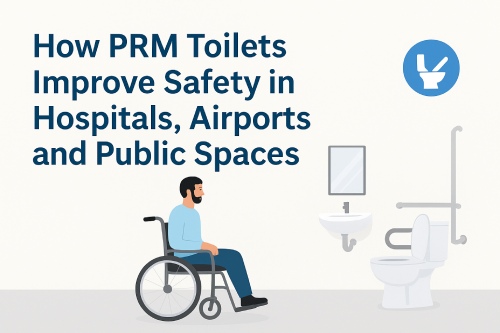
A PRM Toilet (Persons with Reduced Mobility Toilet) is designed to provide safe, accessible, and comfortable washroom use for elderly individuals, wheelchair users, and people with disabilities. In high-traffic environments like hospitals, airports, malls, hotels, and public spaces, PRM toilets play a crucial role in ensuring safety, hygiene, and independence for every user.
What is a PRM Toilet?
A PRM Toilet is a specially designed accessible washroom equipped with support features such as grab bars, height-adjustable accessories, enough movement space, and anti-slip surfaces.
Its purpose is to reduce fall risks, increase accessibility, and maintain user dignity.
Why PRM Toilets are Critical in Public Environments?
Public spaces handle thousands of daily visitors, including elderly, disabled, and temporarily injured people.
A PRM Toilet ensures:
✔ Independence
Users do not need assistance for basic washroom tasks.
✔ Safety
Fall prevention and controlled movement reduce accidents.
✔ Hygiene
Accessible fixtures help maintain cleanliness.
✔ Compliance
Most countries have accessibility standards (ADA, ISO, BIS).
How PRM Toilets improve Safety in Hospitals?
Hospitals have the highest number of patients with mobility limitations. PRM toilets here are crucial for:
✓ Preventing Falls
Grab bars, anti-slip floors, and height-adjustable seats reduce the risk of slipping.
✓ Safe Transfers for Wheelchair Users
L-shaped and U-shaped grab bars provide stability during transfers.
✓ Easy Access for Caregivers
Adequate space allows staff to assist without risk of injury.
✓ Faster Movement for Emergency Cases
Clear pathways and smart design prevent delays.
Recommended PRM Accessories for Hospitals:
How PRM Toilets Improve Safety in Airports
Airports must meet global accessibility standards. PRM toilets enhance safety by offering:
✓ Wide Turning Radius for Wheelchairs
Allows easy movement for passengers and attendants.
✓ Foldable Support Arms
Provide additional support for standing users or those with temporary injuries.
✓ Clear Visual Signage
Braille and tactile indicators ensure easy navigation.
✓ Height-Optimized Fixtures
Grab bars, basins, and toilet seats installed as per accessible standards reduce strain.
✓ Emergency Assistance Systems
Pull cords or panic button alarms provide instant help.
Ideal for Airports:
- Foldable shower seats
- Vertical grab bars
- Horizontal grab bars
- Track systems for adjustable washbasins
How PRM Toilets improve Safety in Public Spaces
Public areas such as malls, metro stations, offices, parks, and hotels require PRM toilets to ensure everyone can access washrooms safely.
✓ Reduces Slip Accidents
Anti-slip flooring prevents falls in high-use areas.
✓ Supports Heavy Foot Traffic
Durable stainless-steel grab bars withstand frequent use.
✓ Enhances User Confidence
People with mobility issues feel secure and comfortable.
✓ Promotes Inclusive Infrastructure
Ensures that every visitor, regardless of physical ability, can use the facilities.
Common PRM Features in Public Spaces:
- U-shaped grab bars
- L-shaped grab bars
- Height-adjustable washbasin tracks
- Shower change tables (in caregiving zones)
- Accessible panic alarms
Key Safety Features of a Modern PRM Toilet
1. Grab Bars (Straight, L-Shaped, U-Shaped)
Provide stability for sitting, standing, and transferring.
2. Support Arms
Offer additional assistance for balancing or standing up.
3. Height-Adjustable Fixtures
Washbasins, shower seats, and tracks help customize positioning.
4. Anti-Slip Flooring
Prevents slipping, especially in wet areas.
5. Wider Doorways
Wheelchair-friendly entry and exit.
6. Emergency Call System
Allows quick help in case of accidents.
7. Proper Layout and Dimensions
Ensures enough space for wheelchair turning and caregiver assistance.
PRM Toilet Standards and Guidelines
PRM toilets must follow accessibility guidelines such as:
✔ ADA Standards (USA)
Defines clear space, bar placement, seat height, etc.
✔ ISO Standards
International accessibility guidelines.
✔ Building Codes (India & Global)
Public spaces must include accessible toilets as per government norms.
Benefits for Facility Owners
Installing PRM toilets helps institutions:
✓ Reduce accident risks
✓ Avoid legal compliance issues
✓ Improve brand reputation
✓ Provide inclusive infrastructure
✓ Enhance visitor satisfaction
Conclusion
A well-designed PRM Toilet not only improves safety but also ensures independence, dignity, and accessibility for people with reduced mobility. Whether in hospitals, airports, or public spaces, PRM toilets create a safer environment for everyone while meeting legal and accessibility standards.