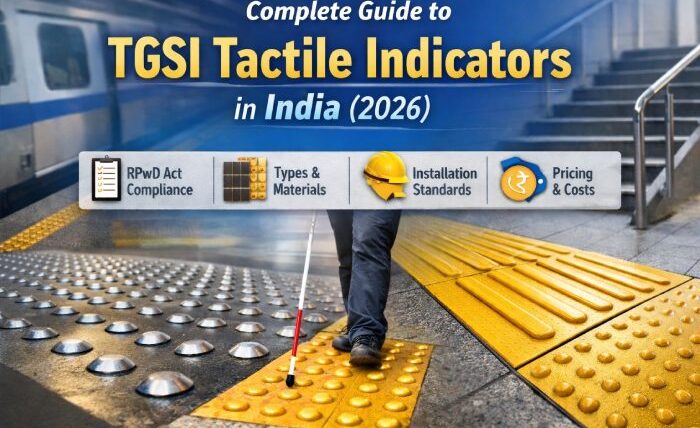
TGSI Tactile (Tactile Ground Surface Indicators) are essential accessibility solutions designed to assist visually impaired individuals in navigating public and private spaces safely. In India, the demand for TGSI tactile tiles and stainless steel tactile studs has increased significantly due to stricter accessibility regulations under the RPwD Act 2016 and universal design standards.
This complete 2026 guide explains everything you need to know about TGSI tactile indicators — types, materials, installation guidelines, legal requirements, and where they are mandatory in India.
What is TGSI Tactile?
TGSI (Tactile Ground Surface Indicator) refers to textured surface elements installed on floors to guide or warn visually impaired individuals.
These tactile indicators can be detected using:
- Foot sensitivity
- White cane
- Shoe sole feedback
They are commonly installed in:
- Railway stations
- Metro platforms
- Airports
- Hospitals
- Government buildings
- Educational institutions
- Commercial complexes
TGSI tactile systems improve accessibility, safety, and independent mobility.
Types of TGSI Tactile Indicators
There are two primary types of tactile ground surface indicators:
1️⃣ Warning (Hazard) Tactile Indicators
- Pattern: Blister or dot design
- Purpose: Alert users to hazards
- Used at: Staircases, platform edges, ramps, crossings
2️⃣ Directional (Guiding) Tactile Indicators
- Pattern: Linear bars
- Purpose: Provide navigation path
- Used in: Corridors, open halls, pathways
These tactile tiles help create safe walking routes for visually impaired individuals.
Materials Used in TGSI Tactile in India
TGSI tactile products are available in multiple materials:
🔹 Stainless Steel Tactile Studs
- Highly durable
- Corrosion-resistant
- Suitable for outdoor & heavy traffic
- Ideal for metro stations, airports, commercial areas
🔹 Polyurethane (PU) Tactile Tiles
- Slip-resistant
- Available in bright colors (yellow commonly)
- Suitable for indoor use
🔹 Rubber or PVC Tactile Tiles
- Flexible
- Budget-friendly
- Used in indoor environments
Among these, stainless steel tactile indicators are considered the most durable and long-lasting solution for Indian infrastructure projects.
TGSI Tactile Installation Guidelines (2026 Update)
In India, TGSI tactile installation must align with:
- RPwD Act 2016 (Rights of Persons with Disabilities Act)
- Harmonised Guidelines & Space Standards for Barrier-Free Built Environment
- Indian Roads Congress (IRC) standards
- Metro Rail standards
Key Installation Requirements:
- Installed at decision points (stairs, ramps, crossings)
- Color contrast with floor surface
- Proper spacing between studs or strips
- Slip-resistant surface
- Installed flush with floor level
Professional installation is strongly recommended to ensure compliance and durability.
Where is TGSI Tactile Mandatory in India?
TGSI tactile indicators are mandatory in:
- Government buildings
- Railway stations & metro platforms
- Airports
- Public transport hubs
- Hospitals
- Educational institutions
- Malls & commercial buildings
- Smart city infrastructure projects
Failure to comply can result in accessibility violations under RPwD guidelines.
Benefits of TGSI Tactile Indicators
- Improves independent mobility for visually impaired individuals
- Enhances public safety
- Prevents accidental falls
- Helps organizations meet legal compliance
- Improves universal accessibility standards
- Demonstrates social responsibility
Installing TGSI tactile systems supports inclusive infrastructure development in India.
TGSI Tactile Price in India
Pricing depends on:
- Material type
- Thickness
- Installation method
- Project size
- Indoor vs outdoor application
Stainless steel tactile studs typically cost more than PU tiles but offer longer lifespan and lower maintenance.
For bulk and institutional projects, pricing varies based on quantity and customization.
How to Choose the Right TGSI Tactile?
Consider the following:
- Application area (indoor/outdoor)
- Foot traffic intensity
- Compliance requirements
- Weather exposure
- Budget
- Installation surface type
For metro stations, airports, and public buildings, stainless steel tactile indicators are recommended for durability and compliance.
Conclusion
TGSI Tactile indicators are not just compliance requirements they are essential tools for building inclusive and accessible infrastructure across India. With stricter regulations and smart city developments in 2025, installing high-quality tactile ground surface indicators is crucial for safety, mobility, and legal compliance.
Organizations investing in stainless steel tactile studs and compliant tactile paving systems contribute toward safer public spaces and inclusive urban development.
FAQs
What does TGSI stand for?
What is the difference between warning and directional tactile?
What material is best for TGSI tactile in India?
Who supplies TGSI tactile in India?
Specialized accessibility product manufacturers and infrastructure suppliers provide TGSI tactile systems.