Panic Alarm
Prosafe Living wireless panic alarm systems provide instant emergency alerts for hospitals, hotels, senior care homes, accessible toilets, and commercial spaces. Our panic alarms enable elderly users, disabled individuals, patients, and staff to call for immediate help with a single press.
Every panic alarm in our range is designed for reliable wireless operation, loud audible alerts, and easy installation without complex wiring. Suitable for bathroom emergency situations, bedside patient calls, disabled toilet compliance, hotel room safety, and workplace security.
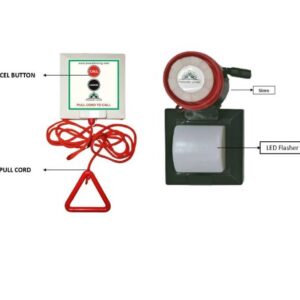

complete guide to panic alarm system
A panic alarm is an emergency alert device that allows a person in distress to instantly notify caregivers, security staff, or emergency responders with a single press of a button. Unlike fire alarms that detect smoke automatically, a panic alarm is activated manually by the user when they need immediate assistance.
Panic alarms are essential safety devices in hospitals, nursing homes, hotels, banks, jewellery shops, accessible toilets, and private homes where elderly or disabled individuals live independently. In India, accessible toilet panic alarms are now mandatory under National Building Code (NBC) and RPwD Act guidelines for all new public buildings.
Types of panic alarm systems
Choosing the right type depends on where you need it and who will use it:
| Panic Alarm Type | How It Works | Best Used In |
| Wall Mounted Push Button | User presses a button fixed on the wall | Bathrooms, toilets, hospital rooms, hotel rooms |
| Pull Cord Alarm | User pulls a cord hanging from ceiling to floor level | Accessible toilets, bathrooms for disabled users |
| Wearable Panic Button | User wears it as pendant or wristband and presses when needed | Elderly living alone, bedridden patients |
| Portable Panic Alarm | Handheld device user carries and presses in emergency | Women safety, night shift workers, security staff |
| Bedside Panic Button | Button placed next to bed within arm reach | Hospital patient rooms, nursing homes, elderly bedrooms |
| Desk Mounted Panic Button | Hidden button under desk or counter | Banks, jewellery shops, reception desks, ATMs |
Wall Mounted Push Button
The most common type of panic alarm. A clearly visible button is mounted on the wall at accessible height. When pressed, it triggers a loud alarm and sends an alert to the receiver unit or caregiver station. Ideal for hospital bathrooms, hotel rooms, and accessible toilets where the user needs to call for help without moving from their position.
Pull Cord Alarm
Specifically designed for accessible toilets and bathrooms for disabled users. A cord hangs from ceiling level down to near the floor so that a person who has fallen can still reach and pull the cord to trigger the alarm. This is the type mandated by NBC India and RPwD Act for all accessible toilets in public buildings.
Wearable Panic Button
Designed for elderly individuals living alone. Worn as a pendant around the neck or a wristband on the wrist. When the user feels unwell, falls, or needs help, they simply press the button to alert family members or caregivers. The wireless signal reaches a receiver unit that produces a loud alarm sound.
Bedside Panic Button
A panic button placed on the bedside table or mounted on the bed rail within easy reach of the patient. Used in hospitals, nursing homes, and home care setups for bedridden patients who cannot get up to press a wall mounted button.
Where should panic alarms be installed?
Panic alarms are required in any location where a person might need emergency assistance and cannot physically reach a phone or move to get help:
Healthcare Facilities
- Hospital patient rooms and bathrooms
- ICU and recovery ward bathrooms
- Nursing home bedrooms and toilets
- Rehabilitation centre bathrooms
- Clinic examination rooms
Hospitality
- Hotel room bathrooms
- Hotel accessible rooms
- Resort pool areas
- Spa and wellness centres
Public Buildings
- Accessible toilets in malls
- Accessible toilets in airports
- Railway station accessible toilets
- Government building accessible toilets
- School and university accessible toilets
Residential
- Elderly parent bedrooms and bathrooms
- Home care patient rooms
- Bathrooms for disabled family members
Commercial & Security
- Bank teller counters
- Jewellery shop counters
- ATM rooms
- Petrol station cash counters
- Warehouse and factory floors
- Parking areas and basements
How does a wireless panic alarm work?
A wireless panic alarm system has two main components:
- Transmitter (Panic Button)
This is the button the user presses during an emergency. It sends a wireless signal to the receiver. It can be wall mounted, pull cord, wearable, or portable depending on the model. - Receiver (Alert Unit)
This is the unit that receives the wireless signal from the panic button and produces a loud alarm sound, flashing light, or sends a notification to alert caregivers or security staff.
How the process works:
- Person in distress presses the panic button
- Button sends wireless signal to receiver
- Receiver produces loud audible alarm and visual flash
- Caregiver, nurse, or security staff hears the alarm
- They respond immediately to the person in distress
The entire process takes less than 2 seconds from button press to alarm activation. No wiring is required between the button and receiver, making installation simple and fast.
Key factors to consider while choosing a panic alarm
Wireless Range
The wireless signal range determines how far the receiver can be placed from the panic button. For home use, a range of 50-100 meters is usually sufficient. For hospitals and hotels, you need a range of 100-200 meters or more to cover multiple rooms and floors.
Always check the real-world range, not the advertised open-air range. Walls, doors, and floors reduce the effective range significantly.
Alert Type
| Alert Type | Best For |
| Loud audible alarm (siren) | Hospitals, hotels, public toilets |
| Flashing light with alarm | Noisy environments, areas where deaf staff may respond |
| SMS or mobile notification | Home use for elderly, remote caregiver alert |
| Caregiver pager alert | Nursing homes, hospital wards |
Water Resistance
If the panic alarm will be installed in a bathroom, toilet, or pool area, it must be water resistant. Not all panic buttons are rated for wet environments. Always verify the IP rating before purchasing for bathroom or accessible toilet installation.
Installation Method
| Method | Best For |
| Screw mounted on wall | Permanent installations in hospitals, hotels |
| Adhesive mounted | Rented spaces where drilling is not allowed |
| Ceiling mounted (pull cord) | Accessible toilets, disabled bathrooms |
| Portable (no installation) | Elderly care, personal safety |
Battery Life
Wireless panic alarms run on batteries. Check whether the battery is replaceable or rechargeable. Long battery life is critical because a panic alarm with a dead battery is worse than no panic alarm at all. The user believes they are protected but the device will not work when needed.
Number of Receivers
For larger facilities like hospitals and nursing homes, one panic button may need to alert multiple receivers at different locations such as the nursing station, the corridor, and the security room simultaneously.
Panic alarm for accessible toilets: what Indian law requires
Under the National Building Code (NBC) 2016 and the Rights of Persons with Disabilities (RPwD) Act 2016, every accessible toilet in a public building must have an emergency alarm system.
Key Requirements:
- A pull cord type panic alarm must be installed in every accessible toilet
- The cord must be reachable from floor level so a person who has fallen can still activate it
- The alarm must produce both audible and visual alerts
- The alert must be received at a manned location such as security desk or nursing station
- The alarm system must be clearly marked with signage
Buildings That Must Comply:
- All government buildings
- Hospitals and healthcare facilities
- Hotels and hospitality venues
- Shopping malls and commercial complexes
- Educational institutions
- Railway stations, airports, and bus terminals
- Any building open to public use
Non-compliance can result in penalties during accessibility audits and building inspection.
Common mistakes when buying panic alarm
Choosing wired over wireless for retrofit projects
Wired panic alarms require running cables through walls and ceilings. For existing buildings, this means breaking walls, re-plastering, and repainting. Wireless panic alarms install in minutes with zero wall damage.
Not checking water resistance for bathroom installation
A standard panic button installed in a bathroom will fail within months due to moisture and humidity. Always verify the IP rating is suitable for wet area installation.
Installing Pull Cord too high in accessible toilet
The entire purpose of a pull cord alarm is that a person who has fallen on the floor can still reach it. If the cord ends at waist height, it defeats the purpose. The cord must hang down to within 10-15cm of the floor.
No receiver within hearing range
A panic alarm is useless if nobody hears it. The receiver must be placed at a manned location where staff is present at all times. In hospitals, this means the nursing station. In hotels, this means the front desk or security room.
Forgetting to check battery regularly
Wireless panic alarms depend on battery power. If the battery dies, the system is completely non-functional. Establish a regular battery check schedule for every unit.
Why choose Prosafe Living?
Prosafe Living is a direct manufacturer and supplier of professional grade emergency safety and accessibility products trusted by healthcare facilities, hotels, and government projects across India.
- ✅ Direct manufacturer with complete quality control
- ✅ Wireless technology with reliable long-range signal
- ✅ Water resistant models available for bathroom and toilet installation
- ✅ Compliant with NBC and RPwD Act requirements
- ✅ Free technical consultation for project planning
- ✅ Bulk supply capability for hospitals and large projects
- ✅ Pan India delivery with secure packaging
FAQ's
How does a panic button work?
A panic button works by sending an immediate alert signal when pressed, notifying caregivers, security staff, or emergency systems that assistance is needed.
How to disable panic alarm?
A panic alarm can typically be disabled using a reset button, key switch, or control panel depending on the system design.
What is panic alarm system?
A panic alarm system is a safety setup that allows users to trigger alerts through buttons or pull cords to request immediate assistance.
What is a panic alarm?
A panic alarm is an emergency alert device designed to quickly call for help during medical, safety, or security situations.
What is a panic button alarm system?
A panic button alarm system is an emergency solution where pressing a dedicated button activates visual, audible, or remote alerts for rapid response.